Hanyang University Engineers Visit SFPUC for Clean Energy Exchange
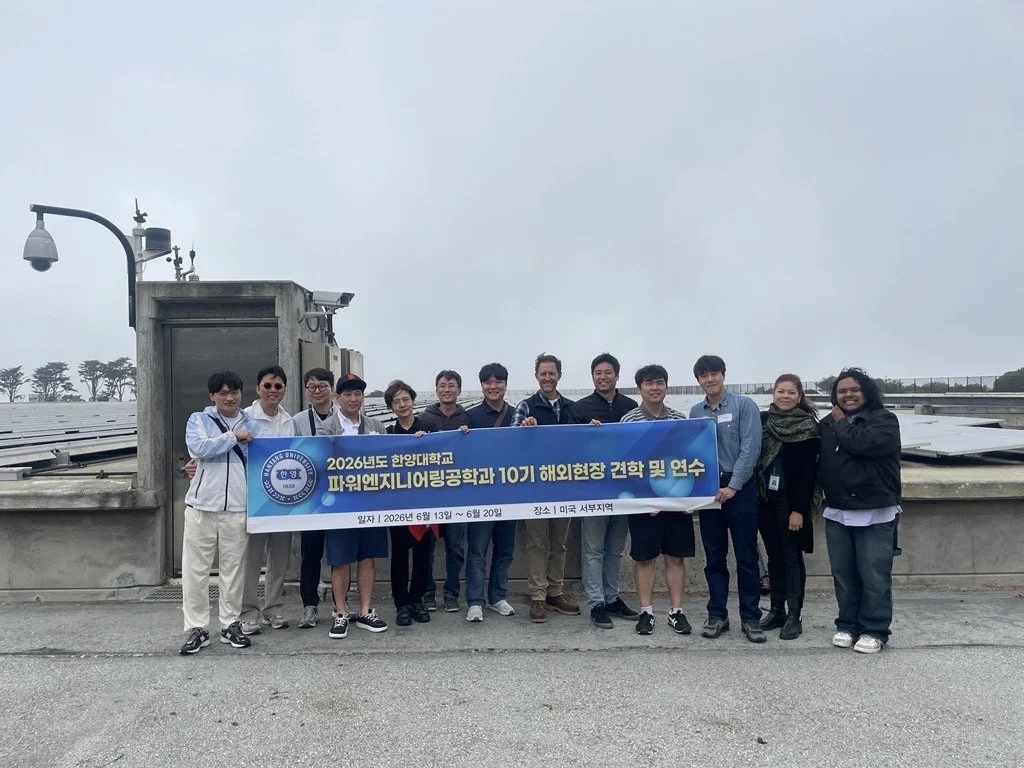
The San Francisco Public Utilities Commission’s (SFPUC) Power Enterprise recently hosted 20 graduate engineering students and four professors from Hanyang University, one of South Korea's most prestigious research institutions, for a presentation on San Francisco’s clean energy efforts.
Led by Elisa Furey Rodriguez, Public Relations Officer for the Power Enterprise; Andrew Bevington, CleanPowerSF Customer Solutions Manager; and Elise Stewart, Performance Management & Compliance Manager for the Power Enterprise; the session kicked off with an overview of Hetch Hetchy Power and CleanPowerSF, the SFPUC’s two clean energy programs. From learning how Hetch Hetchy Power has been providing 100% greenhouse gas-free energy to more than 9,000 customer accounts, including municipal buildings, such as City Hall and San Franciso International Airport, to how CleanPowerSF serves over 385,000 customers and has been delivering 100% renewable energy to all customers since 2023. Together, Hetch Hetchy Power and CleanPowerSF meet over 75% of the electricity demand in San Francisco.
The students were especially engaged by the discussion of energy transmission – how electricity moves from generation sites through the regional grid and into the city. Their curiosity sparked a dynamic Q&A, with questions about grid capacity, load balancing, and the technical infrastructure that supports San Francisco’s energy resilience.
After the in-office session, the group reconvened at the Sunset Reservoir Solar Array in San Francisco's Sunset District for a guided site walkthrough led by Michael Foley, a Utility Analyst for SFPUC’s Power Enterprise. The array is a 5-megawatt system and one of the largest municipal solar projects in the country, covering an area the size of about 11 football fields. This one solar array provides clean electricity to thousands of people in San Francisco daily through Hetch Hetchy Power.
Seoul is no stranger to solar energy either. South Korea is in the midst of a major clean energy buildout. In 2017, the Seoul Metropolitan Government created the Solar City Plan, which aimed to add 1 gigawatt of residential solar capacity by 2022, including panels at 540,000 apartment balconies, 90,000 rental homes, and 370,000 buildings. At the national level, South Korea's total solar capacity surpassed 29.5 gigawatts by the end of 2024, with plans to keep expanding.
Peer to peer exchange is at the heart of what the SFPUC does. Sharing how San Francisco approaches clean energy and learning how global partners are tackling the same challenges is exactly that kind of collaboration. We hope the visit leaves the Hanyang students with ideas to bring back to Seoul, and we look forward to seeing where their work takes them next.